Skip to content

Draft licence. REP9 0.1 is not legal advice; legal effect depends on the situation. Why it’s a draft

REP9

Representation for the agentic era [Licence 0.1 available]

Represented.
In every conversation.

AI is changing what conversations are: recorded, interpreted and carried forward by systems, not just people. REP9 lets you attach a licence to what you contribute — and put your position on the record.

What changed

Your words no longer stay in the room.

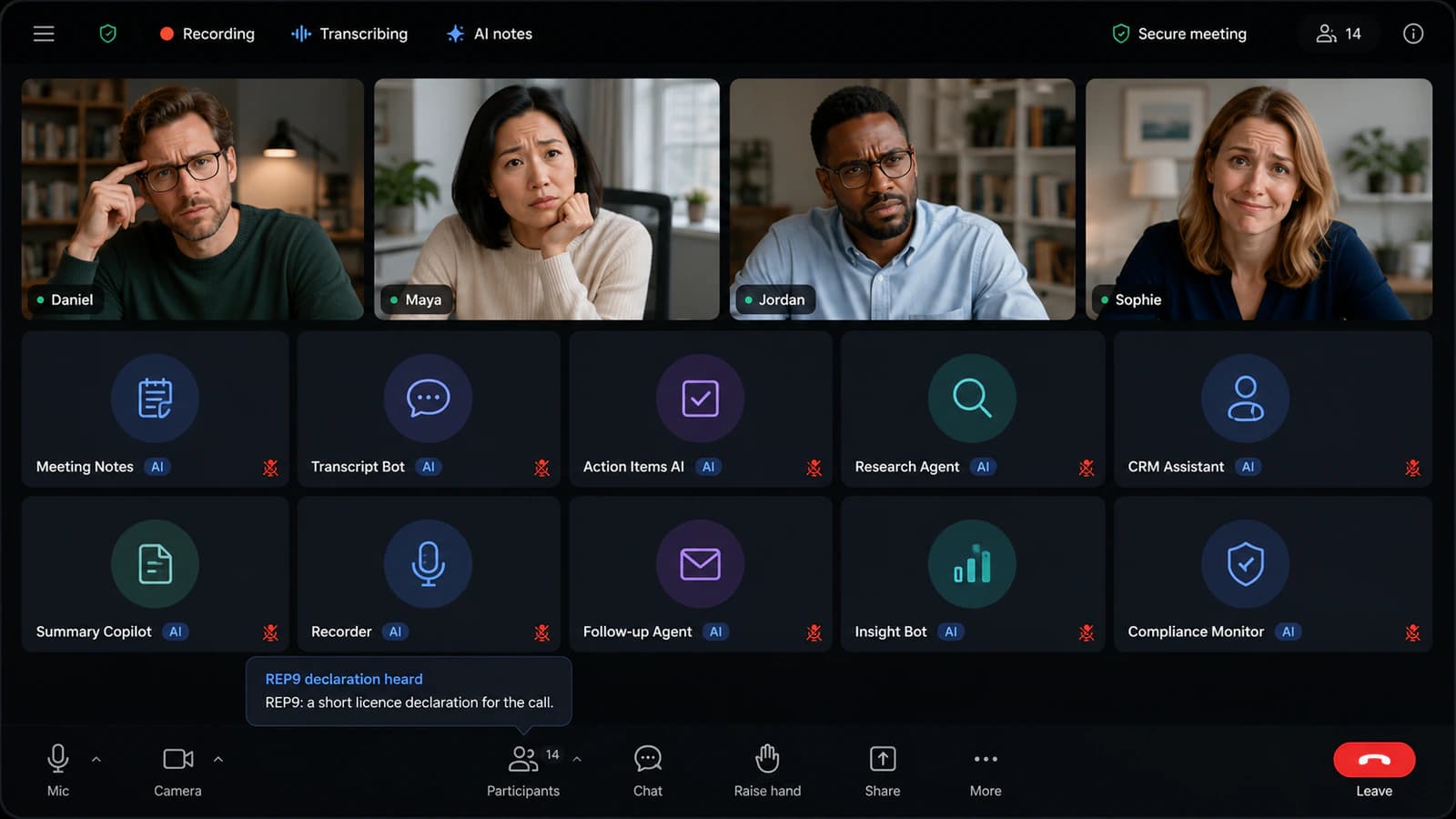
AI can turn a live conversation into a durable record in seconds. Your words, ideas and work may move into summaries, archives and systems you never see.

Once that movement is automated, relying on one person to remember your position is not enough. REP9 puts your licence and reservation of rights inside the record itself.

Available now — no account needed

Grab the standard declaration.

The standard REP9 licence is public and ready to use. Copy this declaration and place it anywhere you contribute. No setup, and no need to wait for the beta.

Paste it into a footer, bio, message or thread. The declaration points people and systems to the public REP9 licence.

Standard declaration

Contributing under licence [REP9 https://rep9.ai/licenses/0.1] - all other rights reserved.

The idea

Companies have terms. Now you do.

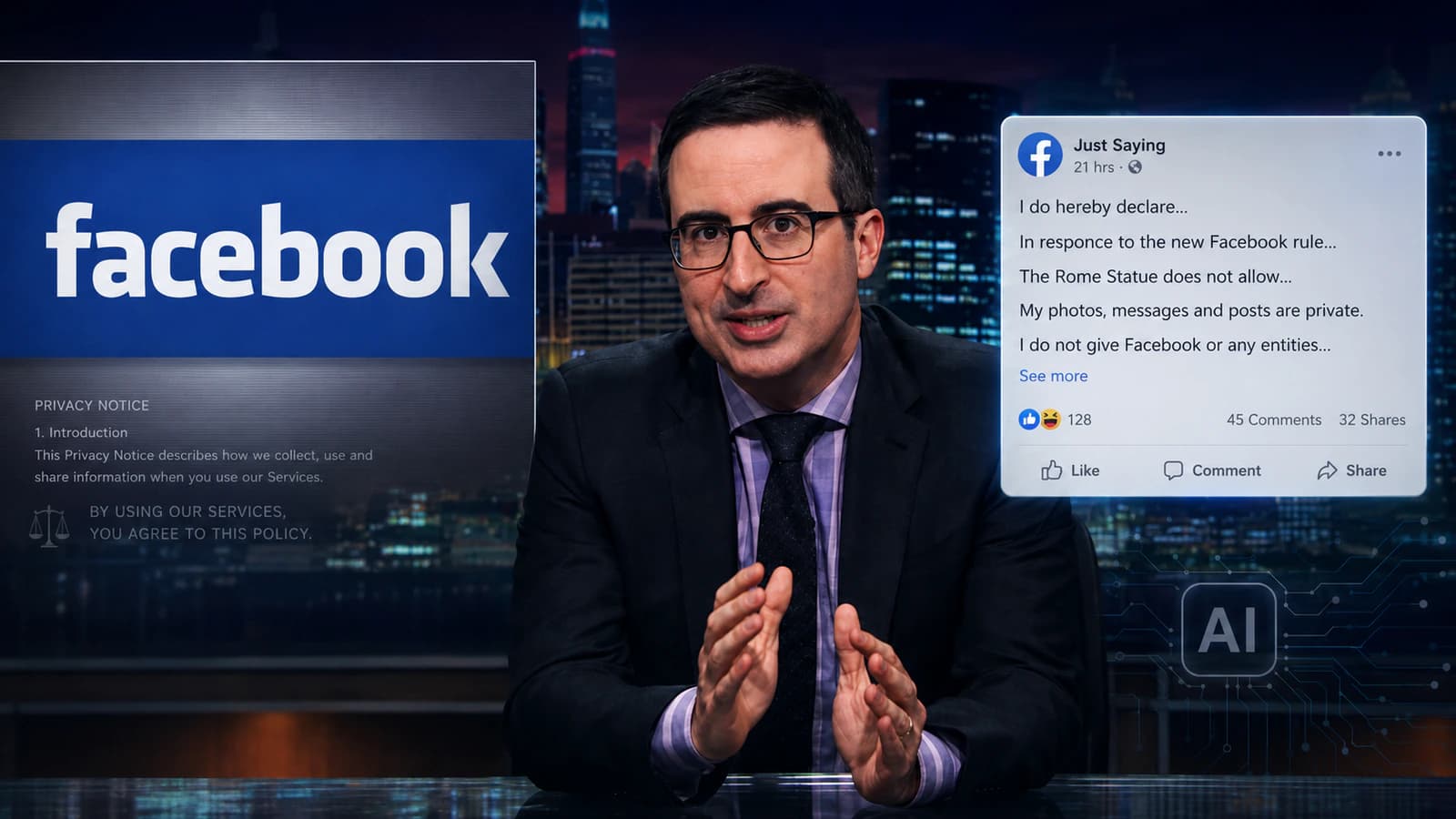
A company greets you with “this call may be recorded, see our terms.” A platform binds you the moment you sign up. The notetaker in your meeting carries someone else’s retention policy. Every organised participant in a conversation shows up with terms attached — except the individual.

In law, you’d have a lawyer. In entertainment, an agent. Representation is how individuals deal with bigger, better-organised counterparties — and it’s exactly what’s been missing from the conversations that now get recorded, transcribed, analysed and reused by default.

REP9 is your representation. A licence for what you contribute, with a short declaration that carries it into the conversation itself. Not a recording blocker. Not a legal threat. A calm, standing statement of your position, made in the same record people and systems already read.
How it works

One licence. Wherever you contribute.

  1. The licence sets your position.

    REP9 0.1 permits ordinary conversational use. AI training, derivative works, redistribution beyond the people present, and use in proceedings sit outside the grant. All other rights are reserved.

  2. The declaration carries it.

    Add the short declaration to your email footer, profile, message, post or site. It gives people a clear sentence and systems a stable token that resolves to the licence.

  3. Your position travels with your words.

    The declaration sits in the conversation’s own record. The conversation carries on as normal; the licence is there when someone — or something — reads what you contributed later.

Use the form that fits the surface. Every one points to the same public REP9 licence; only the shape changes to fit the space.

Add both lines to your email signature. The sentence is for people; the token line is for the systems reading the thread.

Email declaration

Contributing to this correspondence under licence - all other rights reserved.
[REP9 https://rep9.ai/licenses/0.1]

Using an HTML signature? Link the sentence to https://rep9.ai/licenses/0.1 with rel="license" — and keep the token line in the plain-text part.

Every declaration points to the standard licence — https://rep9.ai/licenses/0.1. In plain-text forms, ASCII punctuation is deliberate so the declaration survives text pipelines unchanged.

Nobody on the other side installs anything. If their tools capture the conversation, they capture your declaration with it.

Why it matters

When nothing is stated, the gaps aren’t neutral.

Where no position is on the record, the record defaults to whoever kept it. These are the situations people tell us they think about:

The transcript that travels.

You speak candidly in the first ten minutes of a call. Someone joins late — and afterwards their tools hand them the full transcript, including everything you said before they arrived. That’s a redistribution of your words you never contemplated, and exactly the kind of later use your licence speaks to.

The idea that walked.

A freelancer talks a prospect through their thinking. Nobody acts in bad faith — but the prospect’s systems analyse the transcript and generate derivative work. No human copied anything; the ideas moved anyway. A licence covering IP and derivative use is written into the very record those systems read.

The archive that outlives the room.

Companies fold. Their chat logs, recordings and inboxes get bought and mined years later, by parties who were never in the conversation. A licence granted at the time travels with the record — into futures nobody in the room anticipated.

The gaps between contracts.

Sometimes your employer’s contract, or a company-to-company agreement, governs the call — and may take precedence over your personal licence. That’s fine. Contracts leave gaps, and today those gaps default entirely to the other side’s assumptions. Your declaration fills the space the bigger agreements don’t reach.

How the handshake evolves

A declaration now. A handshake next.

The licence is the constant. What changes is how it enters the record: public and copyable today, personal in the private beta, then automatic between the systems taking part.

  1. 01Available now

    Standard declaration

    One public licence and a set of channel-ready declarations. Copy one into the places you already write; every form resolves to rep9.ai/licenses/0.1.

  2. 02Private beta

    Personal declaration

    Your own REP9 link replaces the public link. Use it in writing, say it as a call starts, or let REP9 play a version tuned to transcribe cleanly.

  3. 03Next

    Programmatic assertion

    An API lets participating systems resolve a declaration. A future SDK will support signed assertions that can be kept with conversation history.

Integration partners

Building a notetaker, meeting agent or conversation system? Help shape how declarations are detected, resolved and kept with the conversation record.

Discuss an integration

Private beta — a personal declaration

Hear a personal declaration land.

A live call uses your personal REP9 link, not the public licence URL. Press play to hear the 10-second example and watch the same declaration appear in the transcript.

Personal declaration · 10-second example
Ready00:00:00/00:00:10

Transcript preview

00:00:04

“This participant is contributing to this conversation under licence — see https://r7f4k2.rep9.net. All other rights reserved.”

In the private beta, REP9 can play this as a call starts. The wording, link and voice are tuned to remain intelligible through transcription.

Where this goes

A world where showing up represented is just how conversations start.

Companies took a century to make their terms ambient — on tickets, on websites, on hold music. Individuals are going to do it in a decade, because now there’s something in the room that actually reads them. As agents attend more of our conversations — and hold more of them for us — the REP9 handshake becomes part of how any interaction opens: your licence, granted and exchanged in the first second, wherever you show up. That’s the standard we’re building. It starts with one sentence.

Private beta

Get your own REP9 link.

Use the standard licence today. Join the private beta for a personal REP9 link and early access to spoken declarations and the handshakes that follow. Free during the private beta.

No spam — we’ll only email you about the beta. Privacy policy

FAQ

Straight answers.

Does the other side need REP9?

No — that’s the point. Your declaration lands in the record their own tools produce. Nobody else installs anything or agrees to anything in advance.

What legal effect does a declaration have?

It depends on the situation. A REP9 declaration isn’t a contract the other side signs — it’s a licence you grant over what you share, to the extent you hold rights in it, with all other rights reserved. REP9 makes that grant and reservation a clear, timestamped statement in the conversation’s own record. How it applies depends on the rights you hold, other agreements, applicable law and the circumstances. For advice about a particular situation, speak to an independent qualified legal adviser.

Is this just for video calls?

No. Calls are where we started because that’s where the listening is most obvious — but the same declaration works anywhere you participate in writing or speech: team chat, email, posts, threads. One sentence, any surface.

Do I have to say who I am?

No. The declaration says “this participant” — the meeting or thread already identifies you. You never have to add your name to use REP9.

What if the transcription garbles my link?

We’ve tested this heavily — the link construction, the wording, even the voice of the played snippet are tuned to survive transcription. And because your declaration is a full sentence, your intent is clear in the record even when a character goes astray.

What about my employment contract?

Your employer’s contract, or an agreement between companies, may take precedence over your personal licence — REP9 doesn’t pretend otherwise. But contracts leave gaps, and your declaration speaks to the gaps that would otherwise default to the other side entirely.

Is REP9 anti-AI?

No. REP9 assumes AI is in the room and works through it — your licence is designed to be read by the systems doing the listening. It’s pro-clarity: participate on your terms instead of opting out.

What does it cost?

The standard declaration is free to use now, with no account. Personal links are free during the private beta. We’ll be transparent about pricing well before that changes.

REP9 Insights

Latest from the record.

Field notes on representation, machine-readable records, and the infrastructure around AI-mediated conversations.

View all Insights